

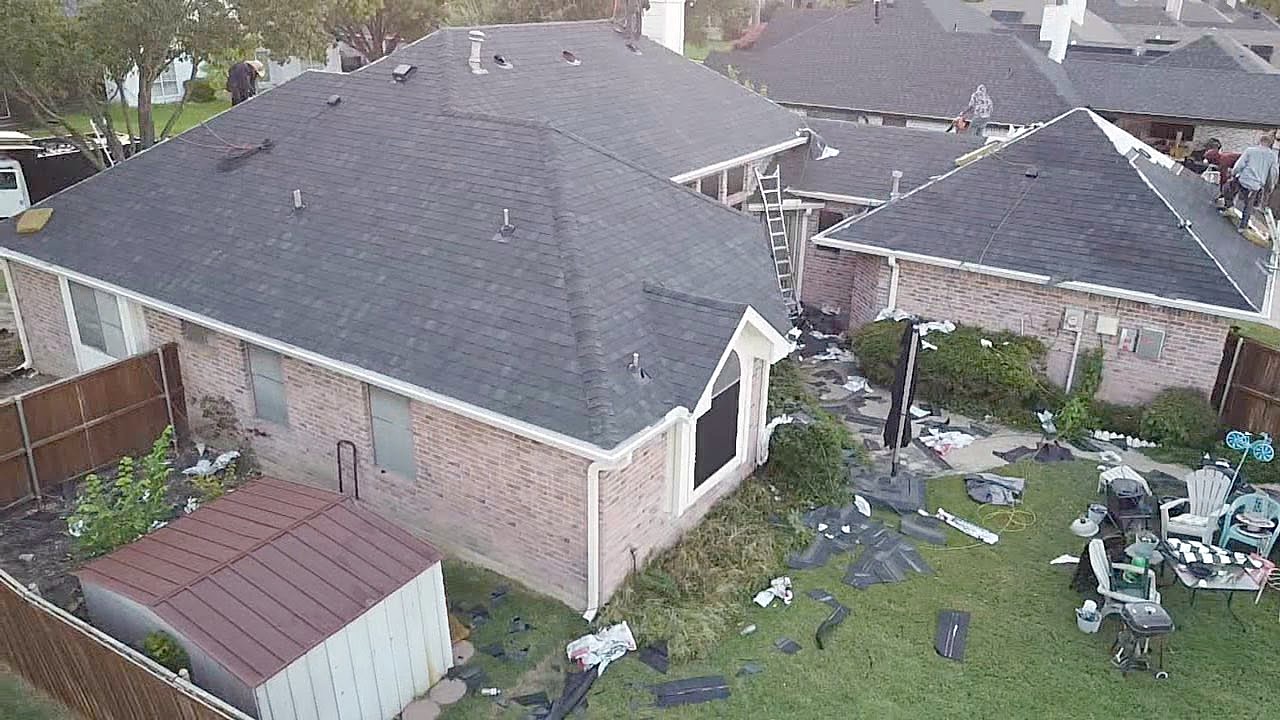
My insurance approved one slope and not the whole roof. Is that normal?
It is common, and whether it is workable is a separate question from whether it is normal. Replacing one slope only works if the new shingle reasonably matches the rest of the roof. Colors are discontinued, manufacturers change blends, and a weathered roof has lost granules that a new bundle has not, so a single-slope repair can leave a visible seam on the most visible part of the house.
Why a partial approval happens
An adjuster writes what the visit supports. If the hail came from one direction, one or two slopes may carry clear bruising and the others may not, and the scope follows the evidence rather than the roof outline.
That is a reasonable starting position rather than a refusal. What it leaves open is whether the approved repair can actually be executed to a standard the homeowner would accept, which is a question about materials rather than about damage.
Matching is a real constraint, not a preference
Asphalt shingles are made in blends that change over time, and colour lines are discontinued regularly. Even where the same line is still made, a roof that has been on a house for a decade has lost granules and faded, so a new bundle of the identical product does not look identical next to it.
On a rear slope that nobody sees from the street, a visible difference may be a fair trade. On a front elevation it is the thing you will look at every time you pull onto the drive. That is worth raising before the work rather than after.
How the conversation usually goes
The useful move is to establish early what the existing shingle actually is, whether it is still made, and what the closest current equivalent looks like weathered rather than new. That turns a vague objection into a specific, checkable one.
Carriers vary in how they handle it and your policy governs the outcome, so this is a question to put to your carrier with evidence attached rather than an argument a roofer can win on your behalf.
When a partial repair is the right answer anyway
Plenty of partial approvals are perfectly sensible. A single slope on a newer roof, a rear elevation, an outbuilding, or a roof whose shingle is still current and abundant: all of those repair cleanly and there is no reason to push for more.
The point is not that partial approvals are wrong. It is that matching decides whether one is workable, and it is a five-minute check at the estimate rather than a discovery on the day the material arrives.
Related questions
Can you match my existing shingles?
Sometimes. It depends on whether the line is still made and how far the existing roof has weathered. We can tell you at the estimate rather than on the day.
Does my policy have to pay for a full roof if it cannot match?
That depends on your policy wording and your carrier, and it is a question to put to them. Some policies address matching directly and some do not.
Is a slightly different shade really a problem?
On a rear slope, often not. On a front elevation it is the first thing anybody sees, so it is worth deciding deliberately rather than by accident.
What if I just want the approved slope done?
Then we do the approved slope. It is a legitimate choice and it is frequently the right one.
